Images of Power and Movement
In ways that are both subtle and precise, Noora Geagea's works examine human experiences under the pressure of expectations from the outside world. Geagea's multi-part video series Struggle (2014-2021) depicts a white man in a suit – a figure universalised as the normative human in western imaginary – struggling against forces of nature, and his own expectations. The Sisyphean nature of the never-ending struggle turns the painterly videos into a representation of life. In the single-channel video Ha ha (2023), a solitary clown sits in an oarless rowboat on the open sea. The painterly work can be read symbolically as an image of life’s aimlessness, however, the clown's vulnerable nature introduces a social dimension to the work, asking who is being laughed at, and by whom? If the white man in a suit in Struggle represents one stereotype of "human," the brown woman in Ha ha challenges us to see racialized and gendered stereotypes, and the dimension of humiliation and exclusion related to laughter. Geagea's works profoundly address power and social exclusion.
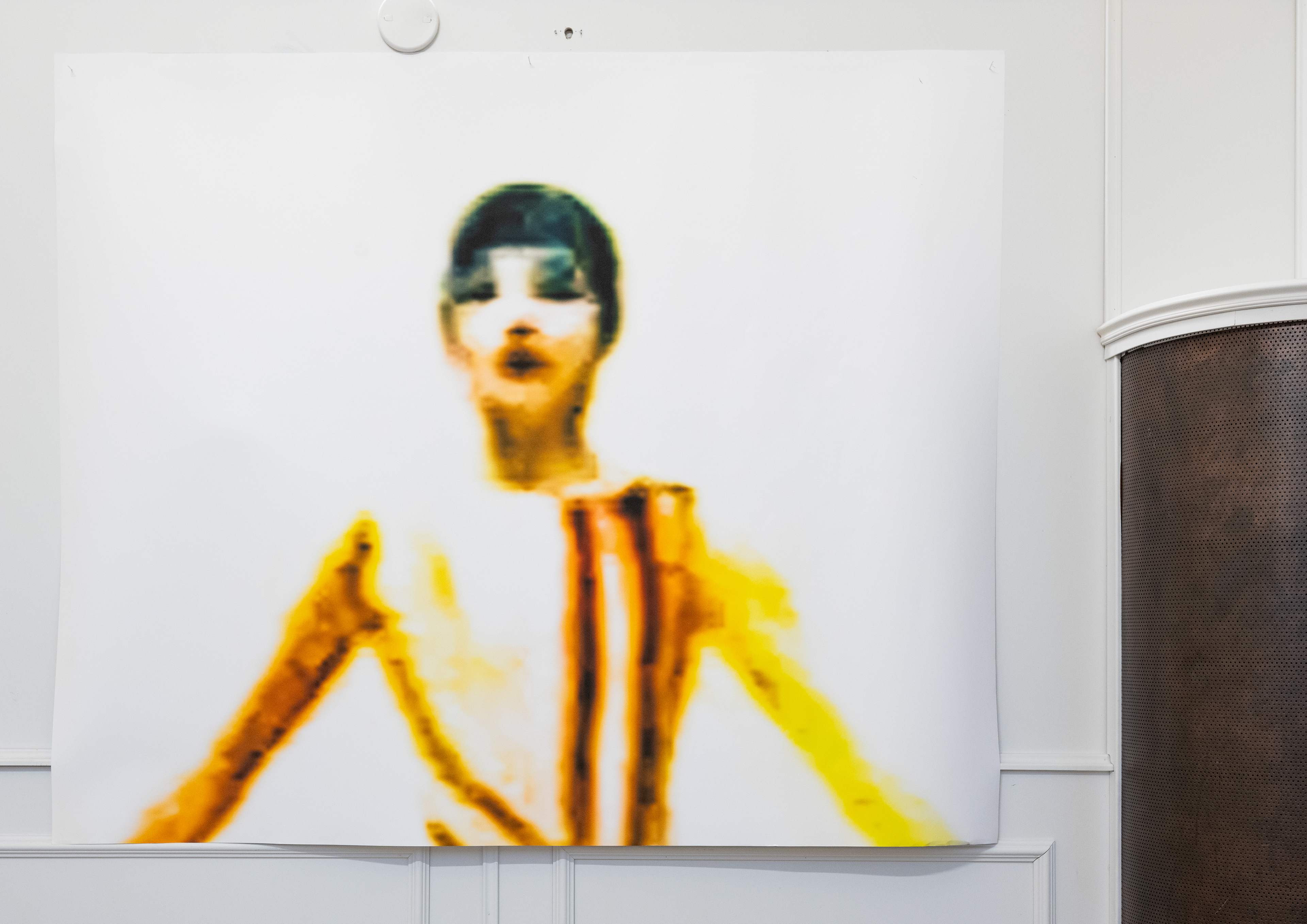
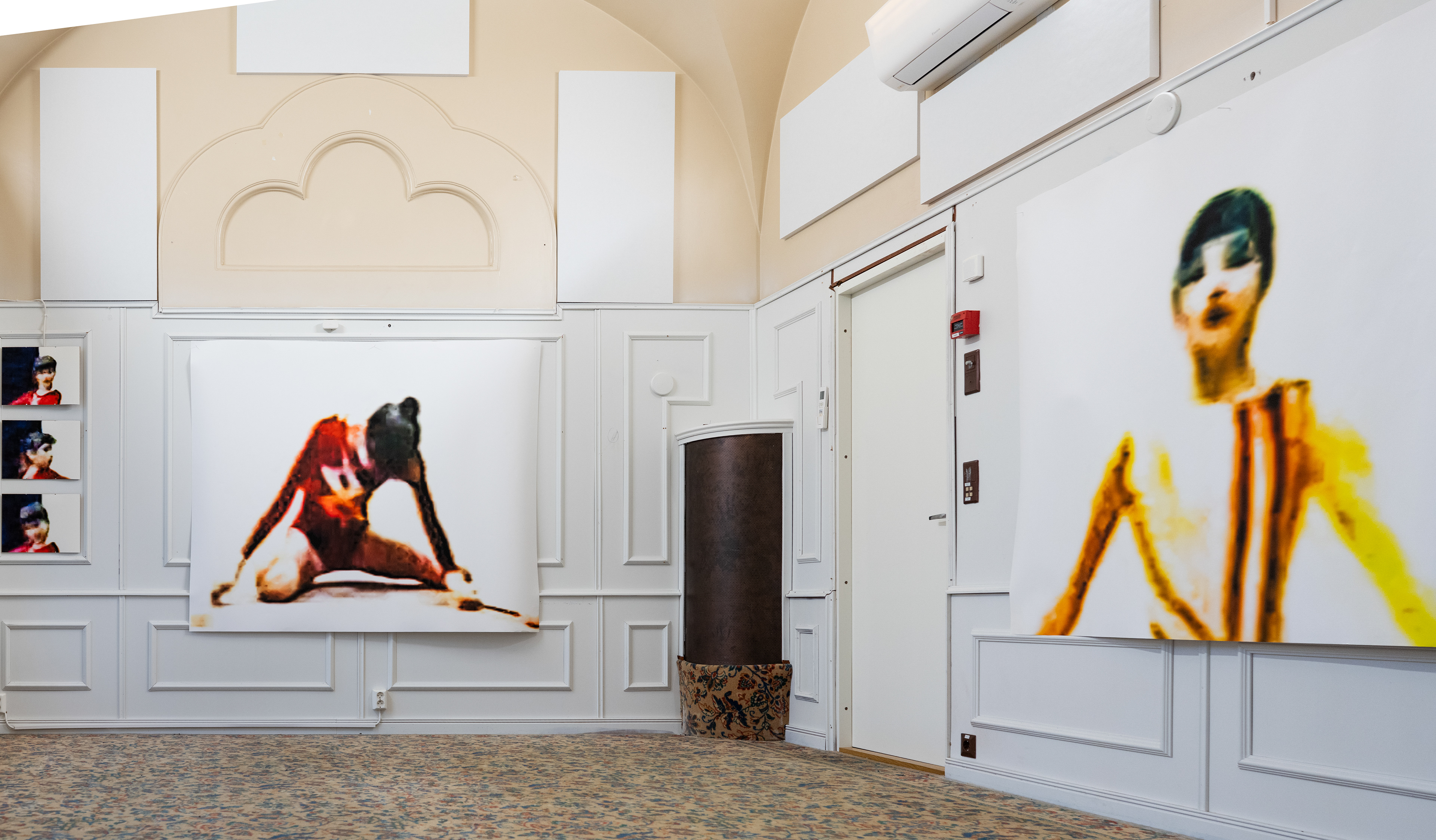
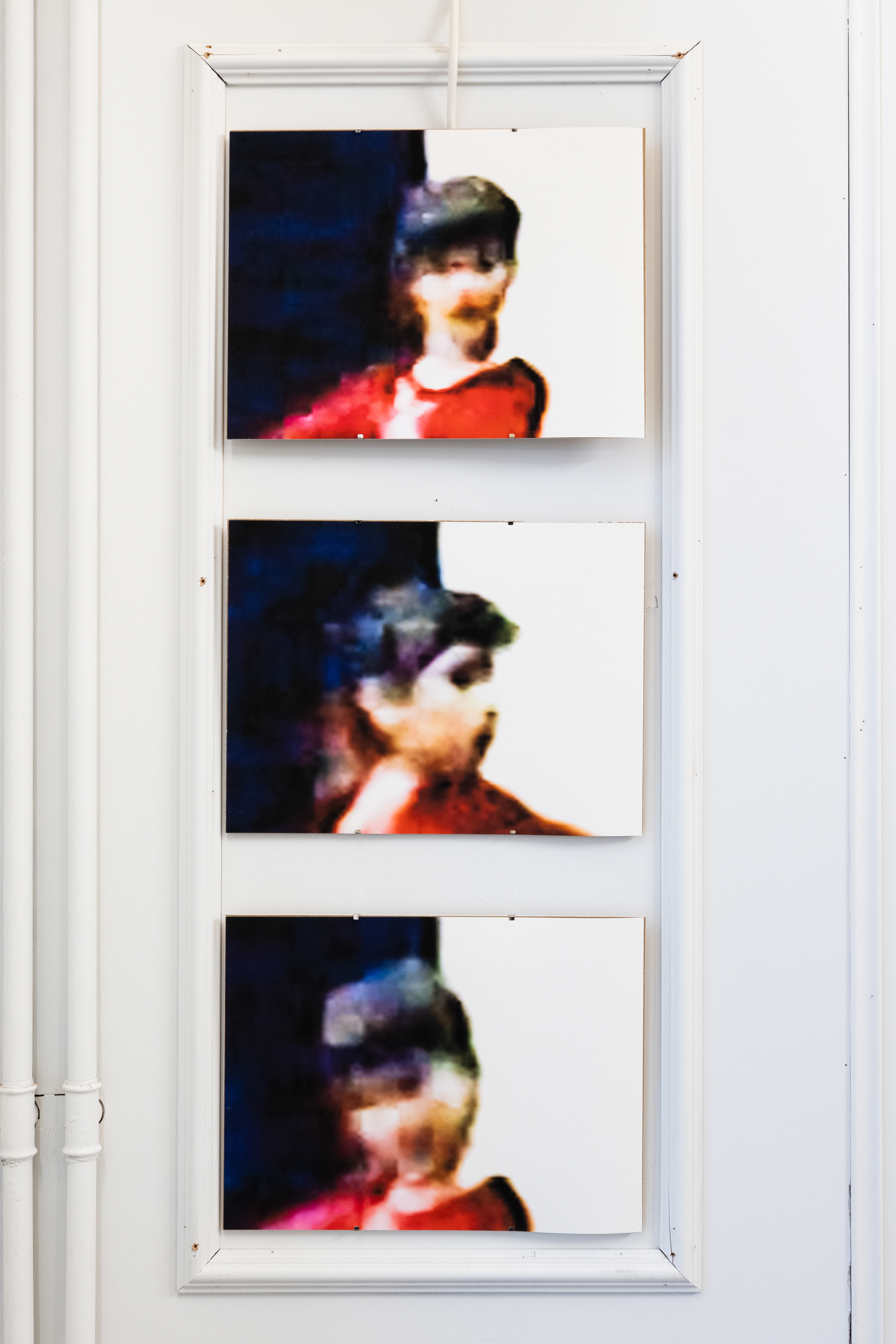
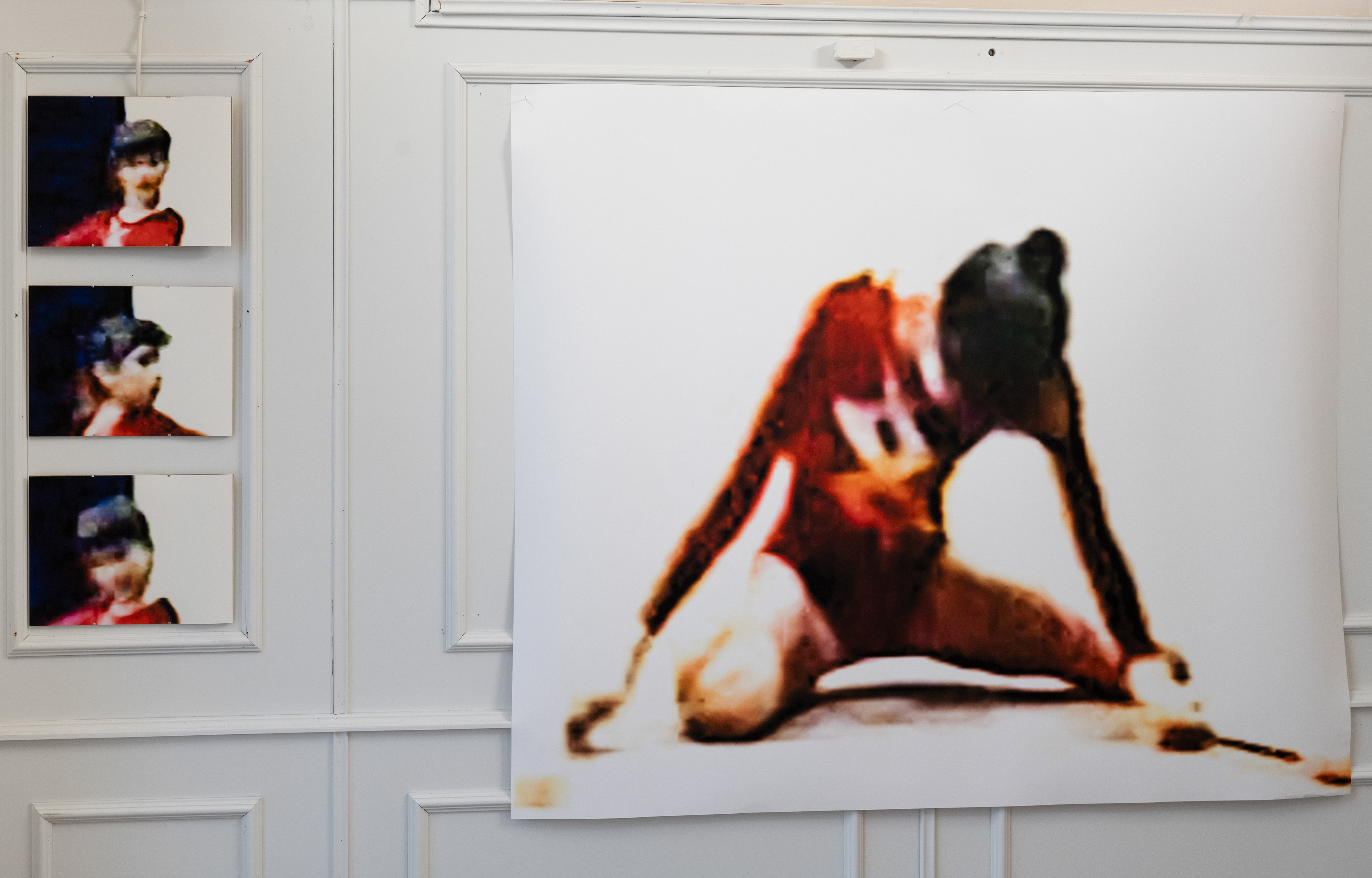
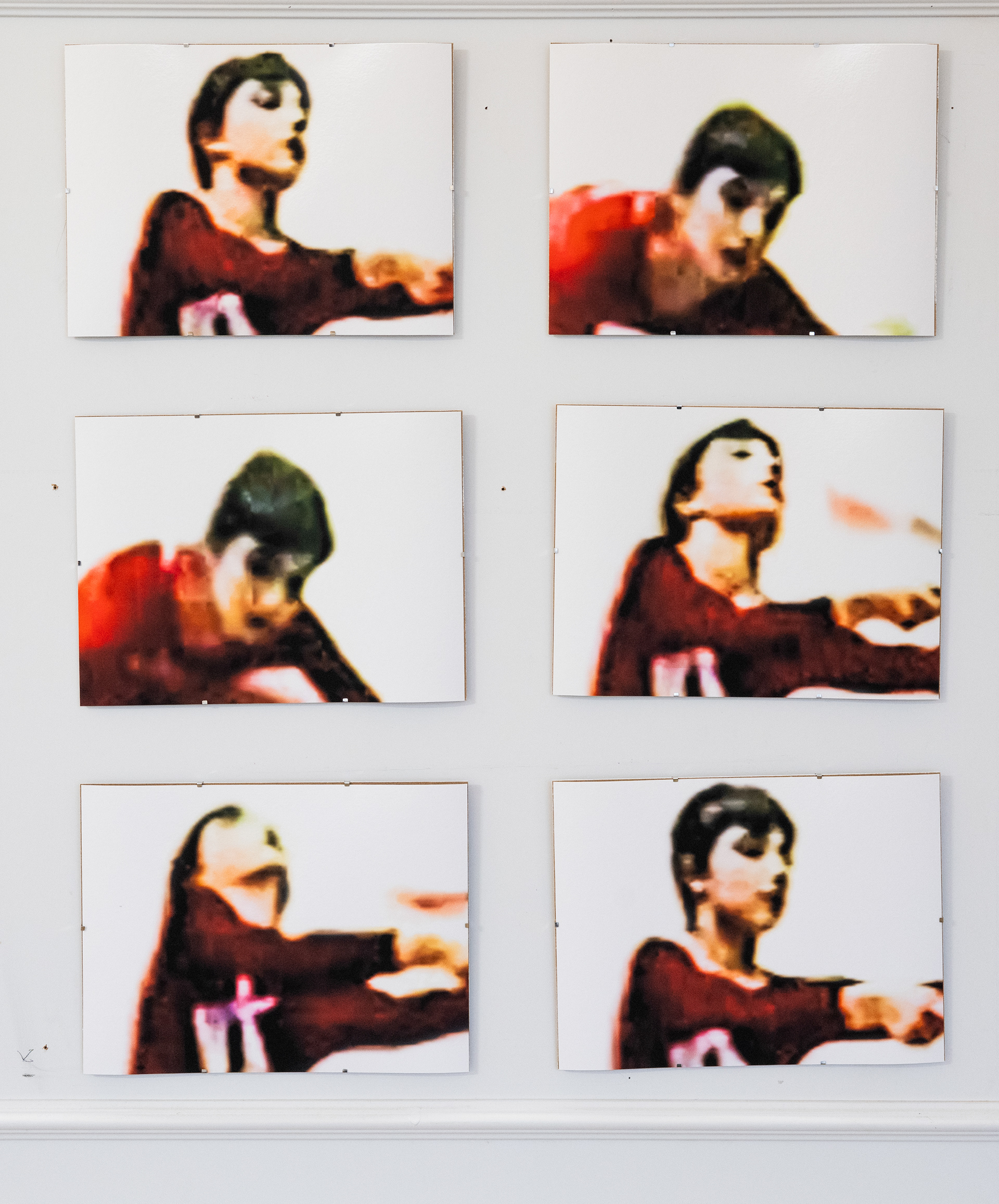
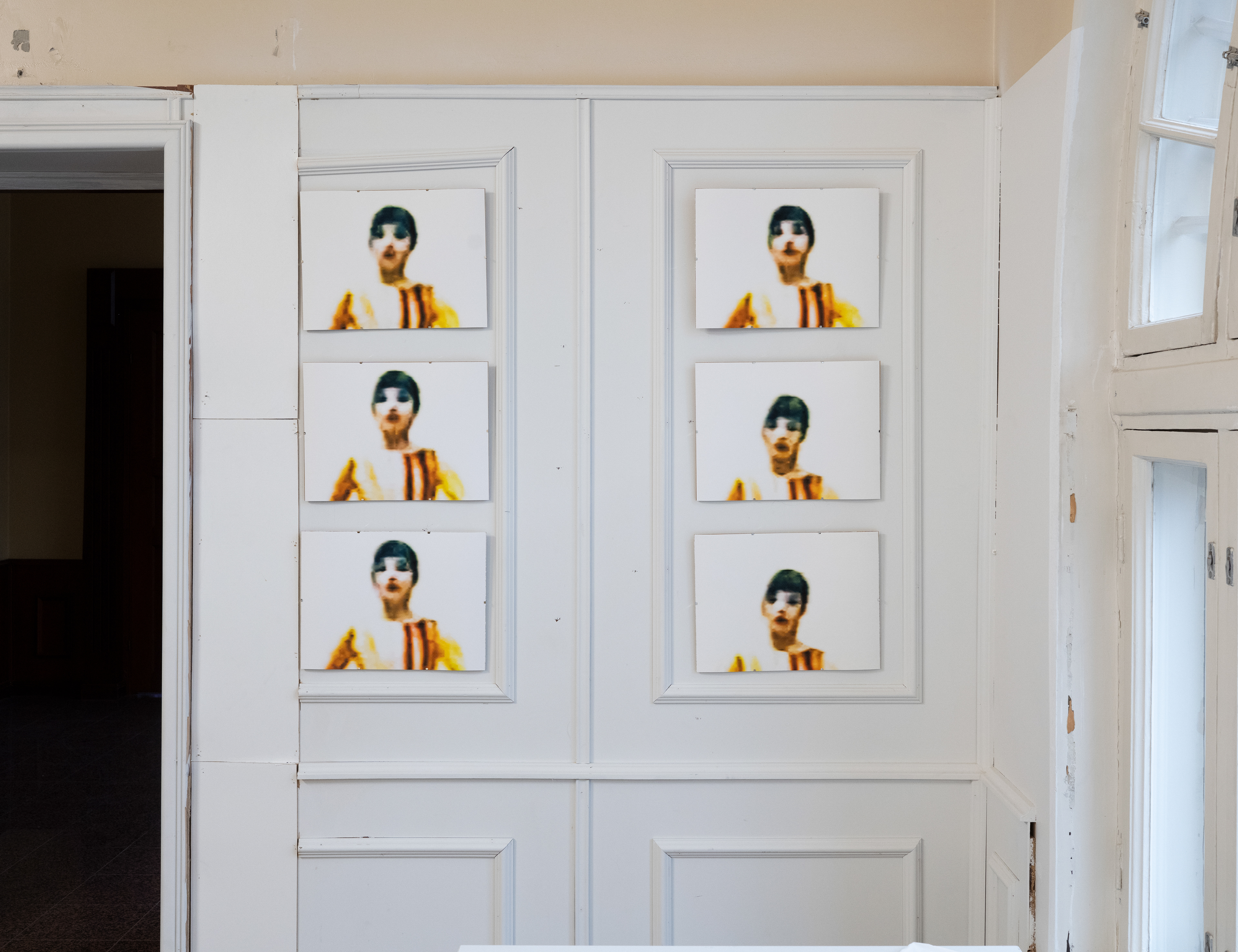
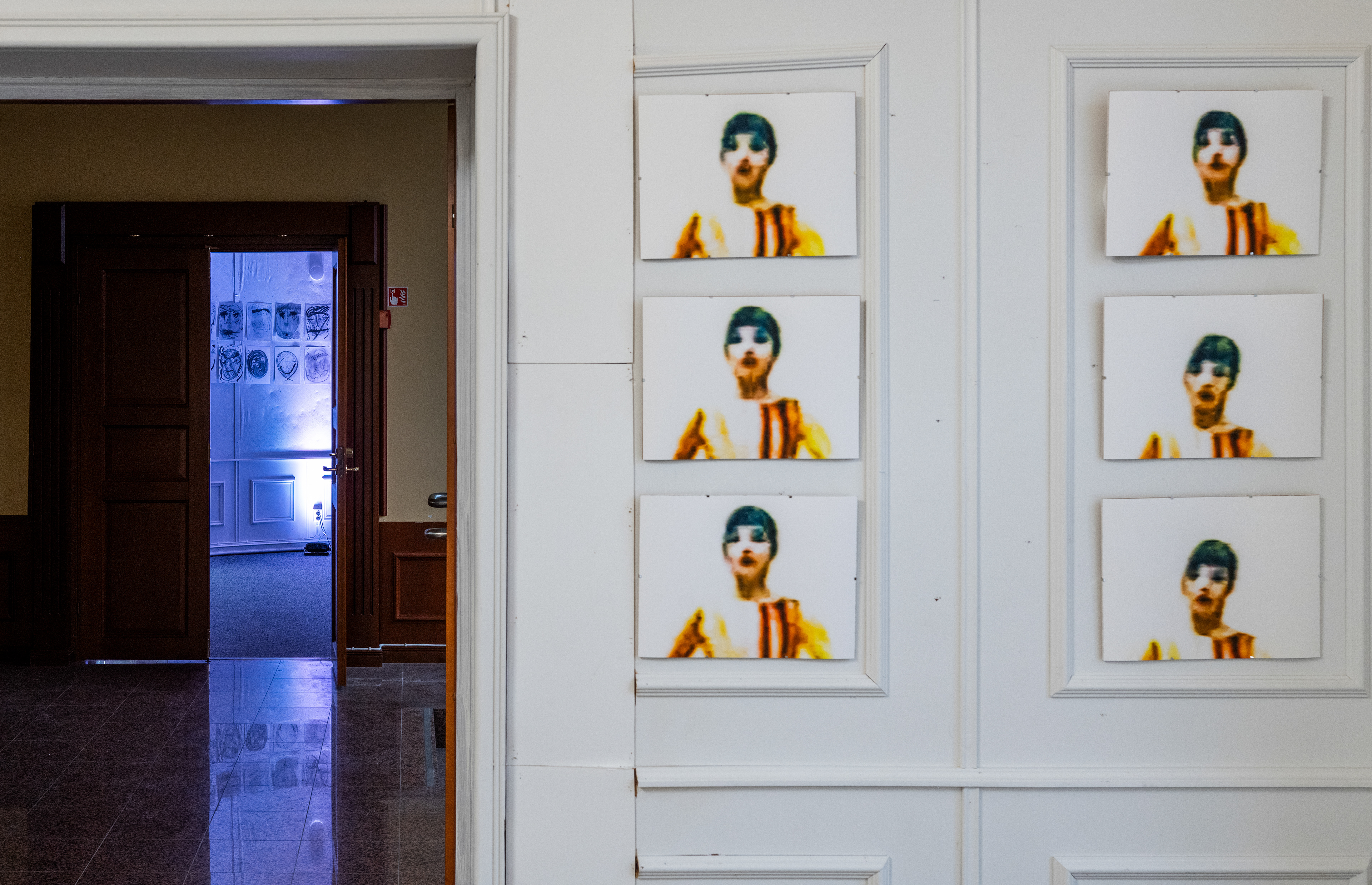
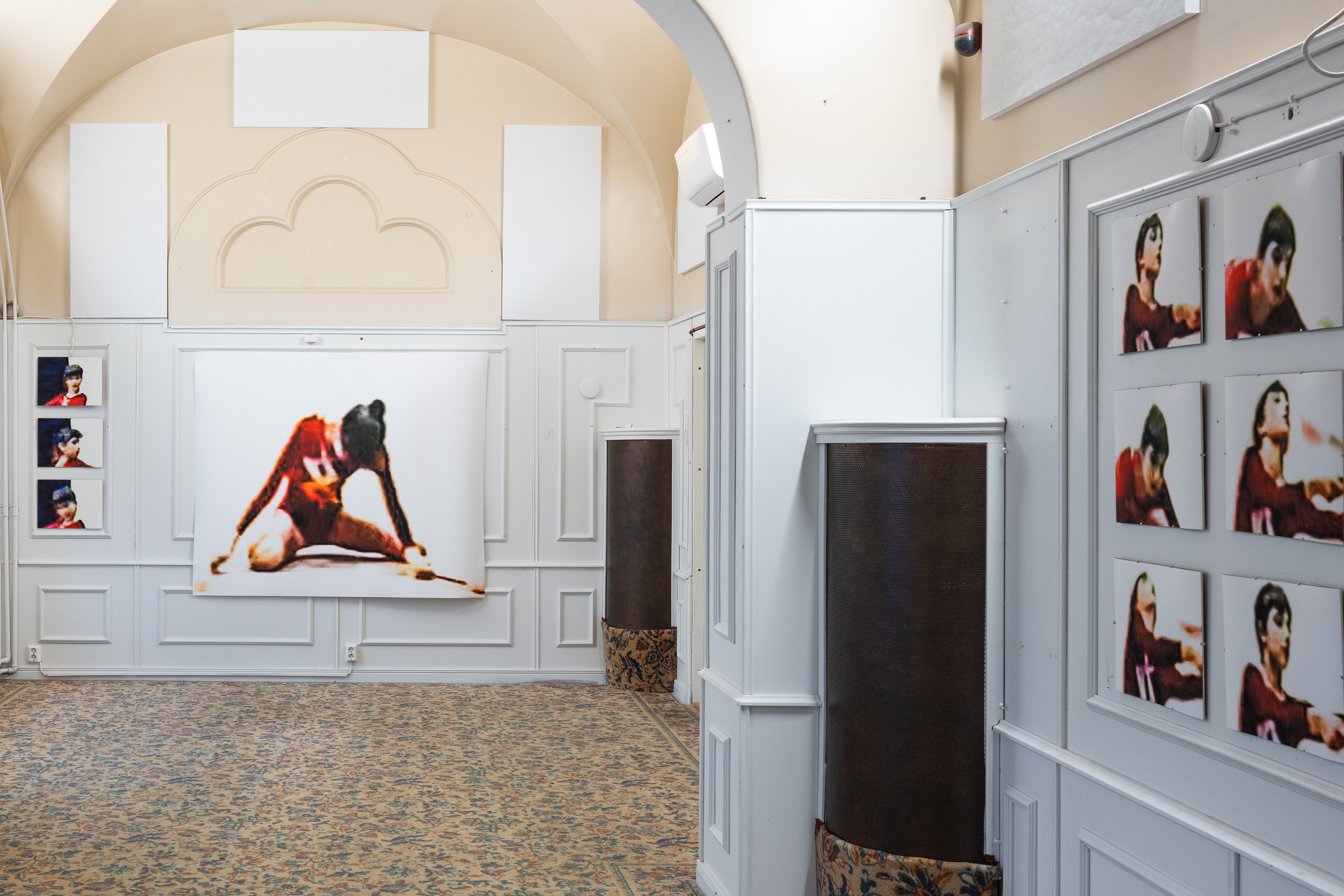
The photography series Competition (2021-2025) is based on still images taken from VHS tape of Geagea as a child practicing rhythmic gymnastics. Behind the works lies a personal experience of the psychological violence associated with competitive gymnastics, and the relationship between the adult coach and the subordinate child being coached.In the photographic works, the video stills appear blurry and memory-like, while marks spray-painted over them break the depth of illusion of the images, bringing the picture surface into this moment. The works contain the structure of trauma: the past event is in the background, but the reaction it triggers is present, an active reality.
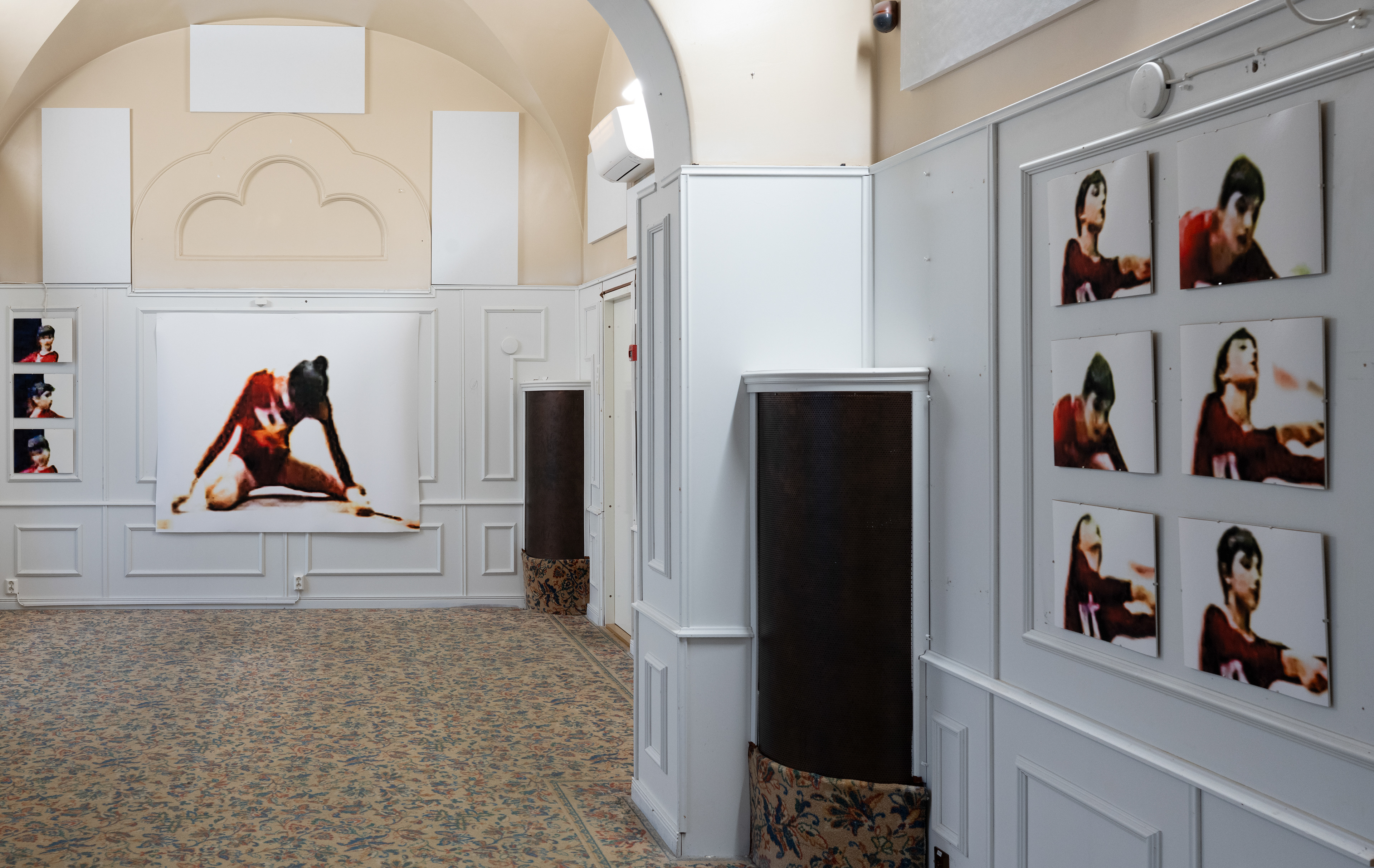
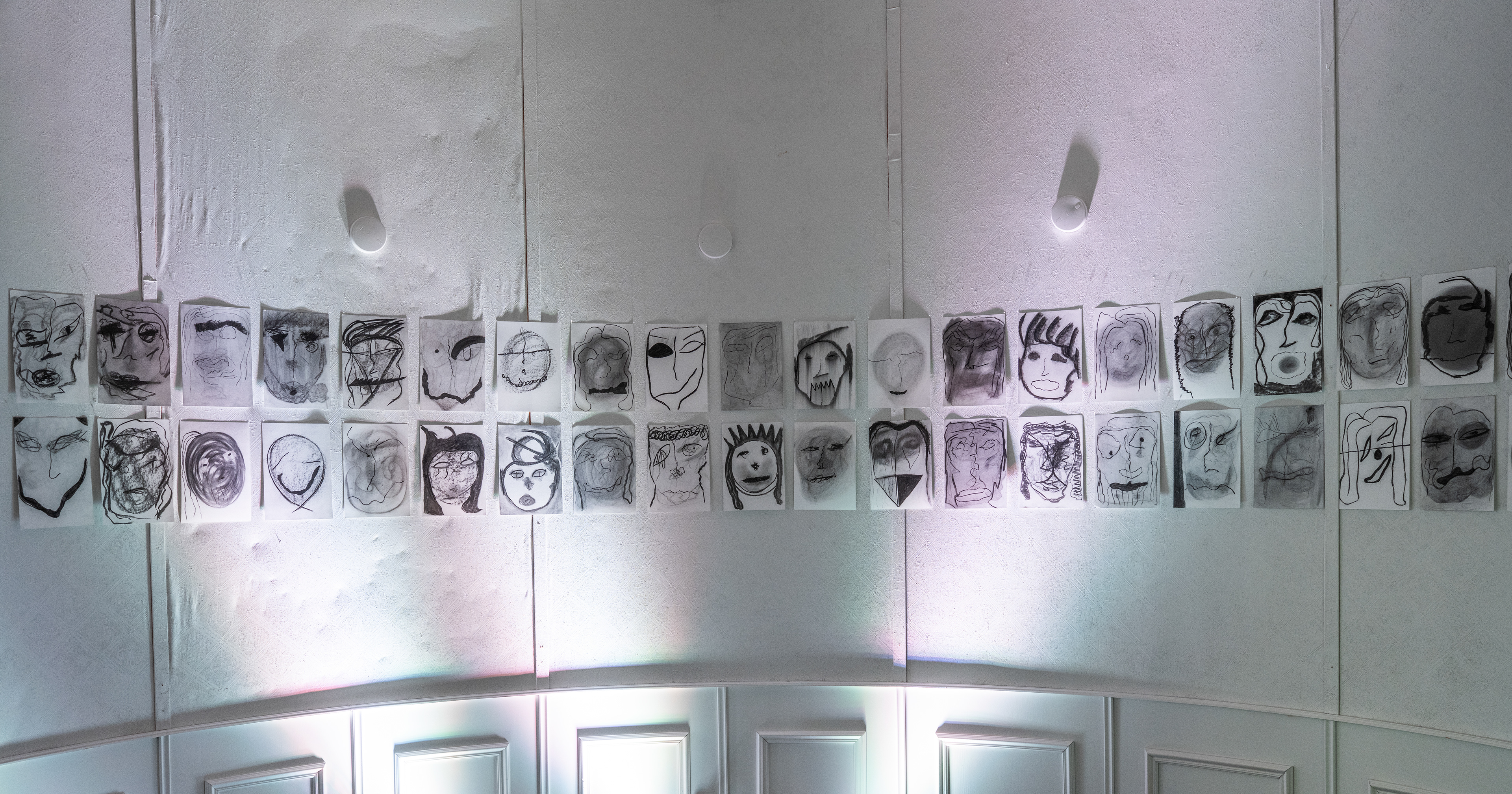
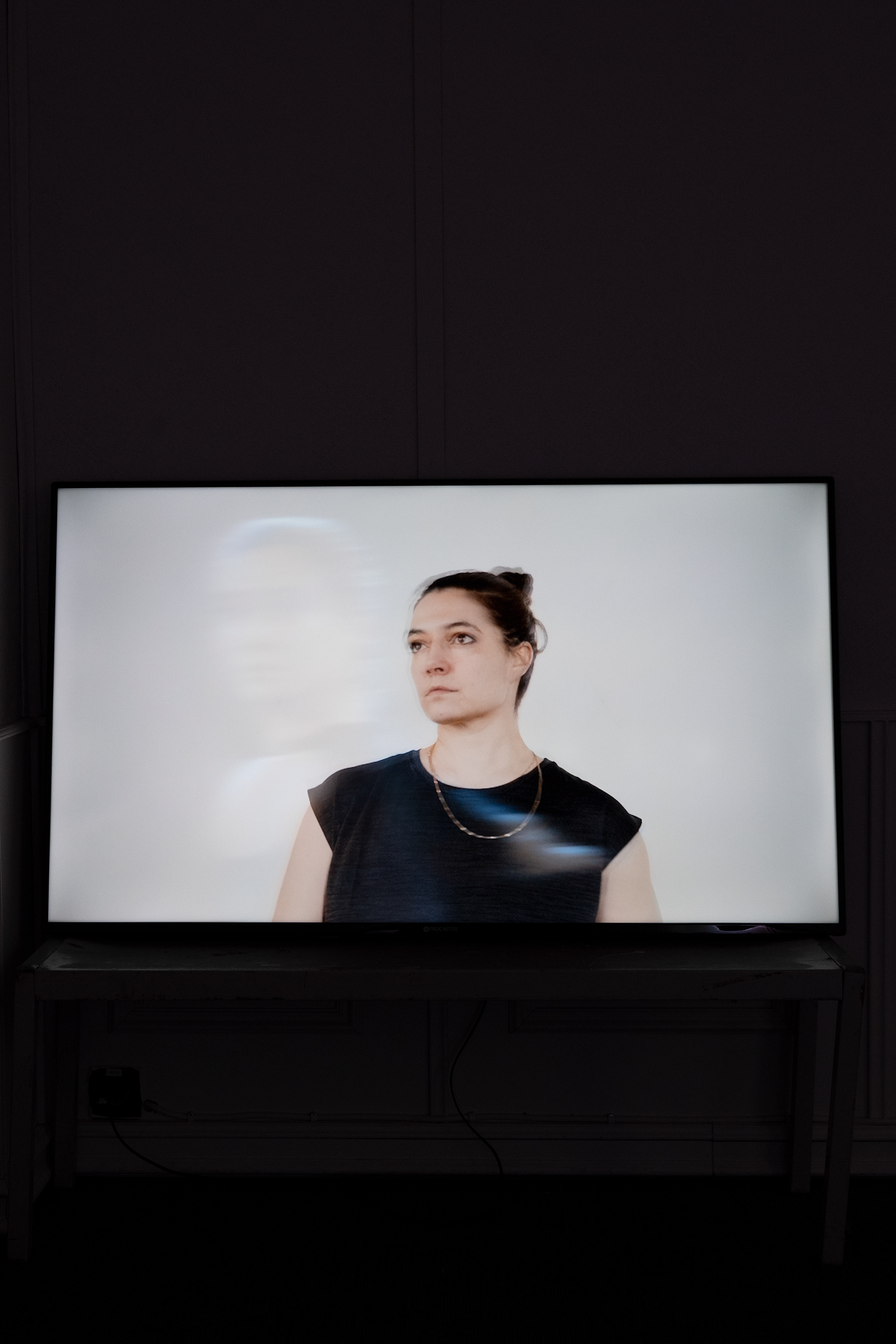
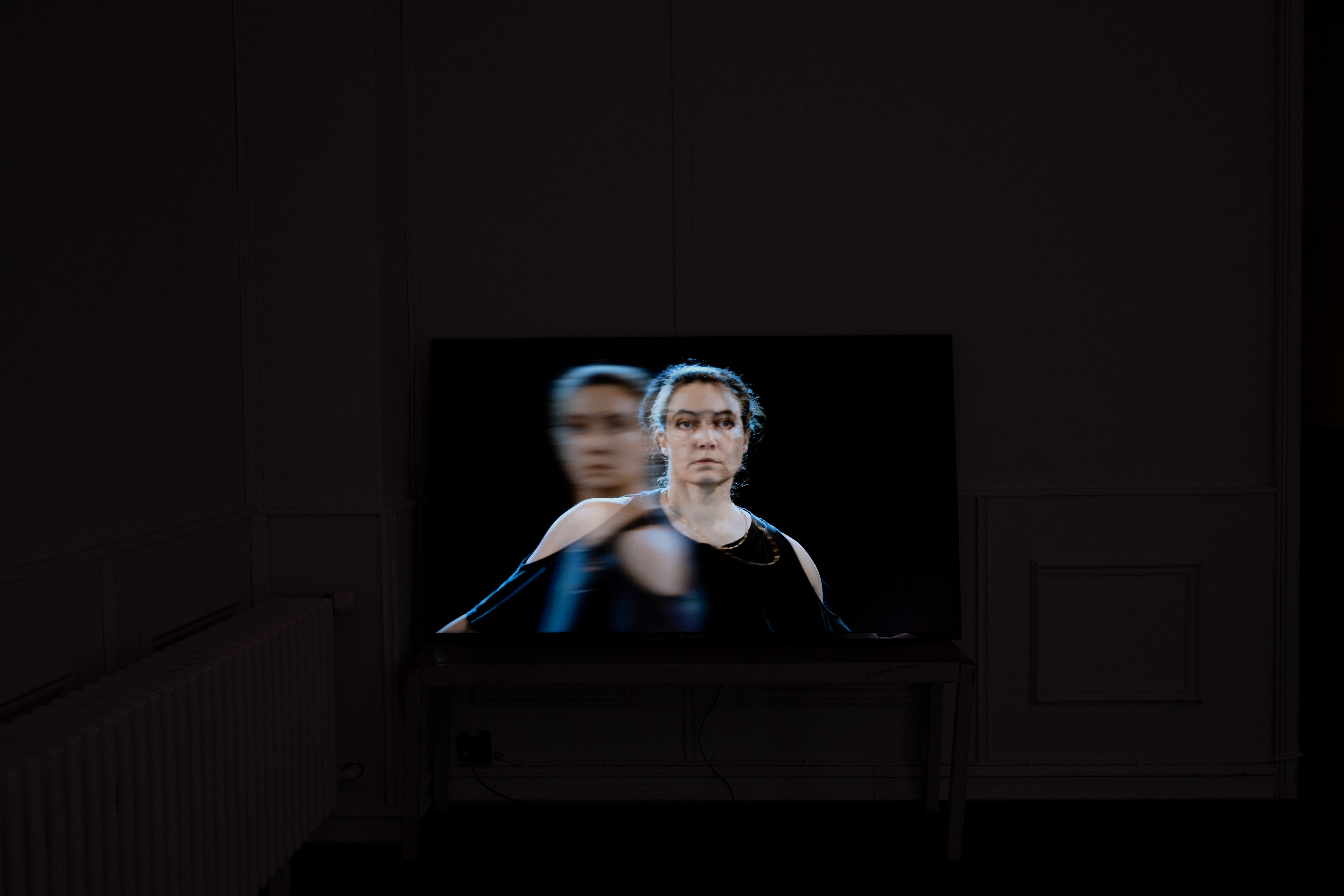
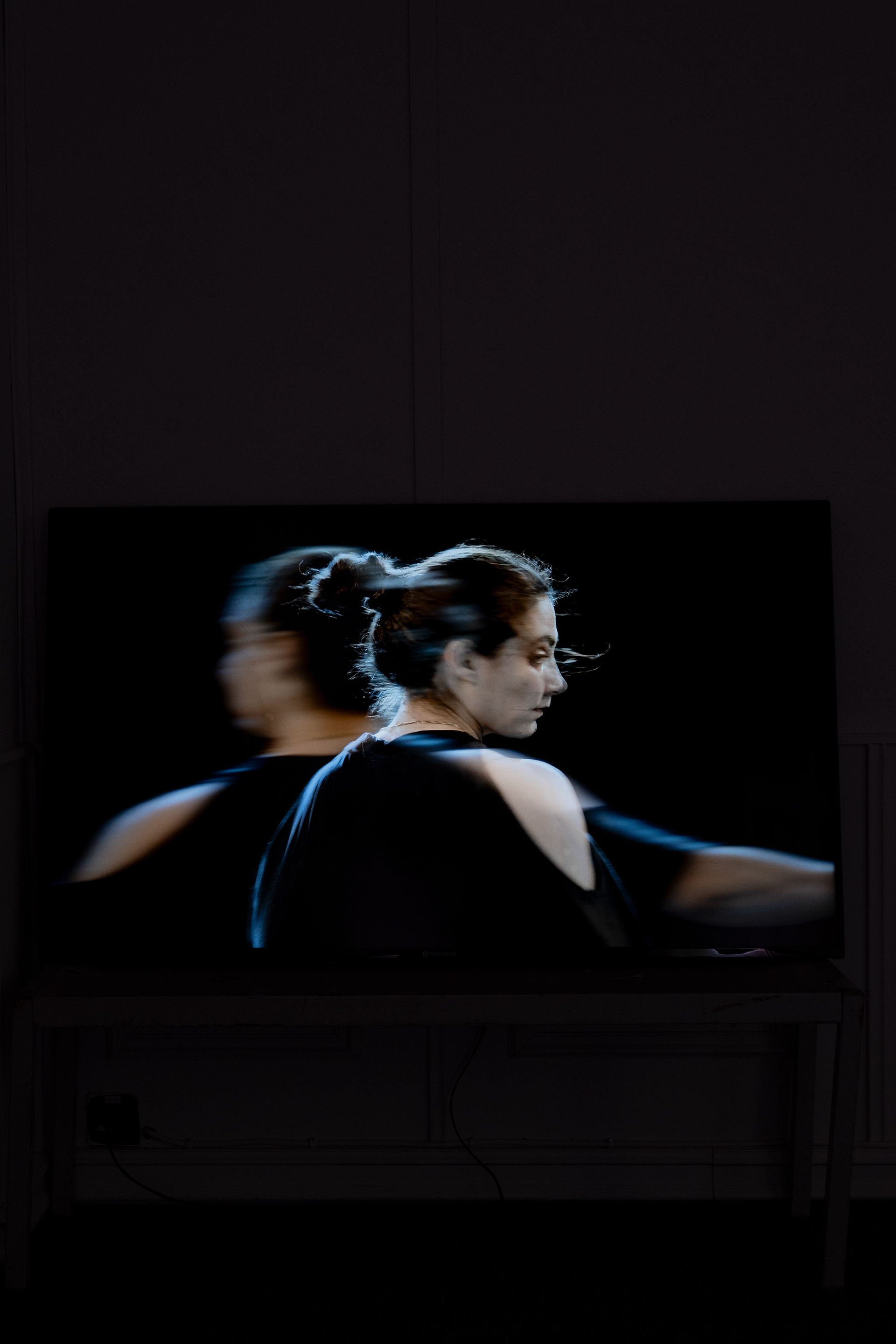
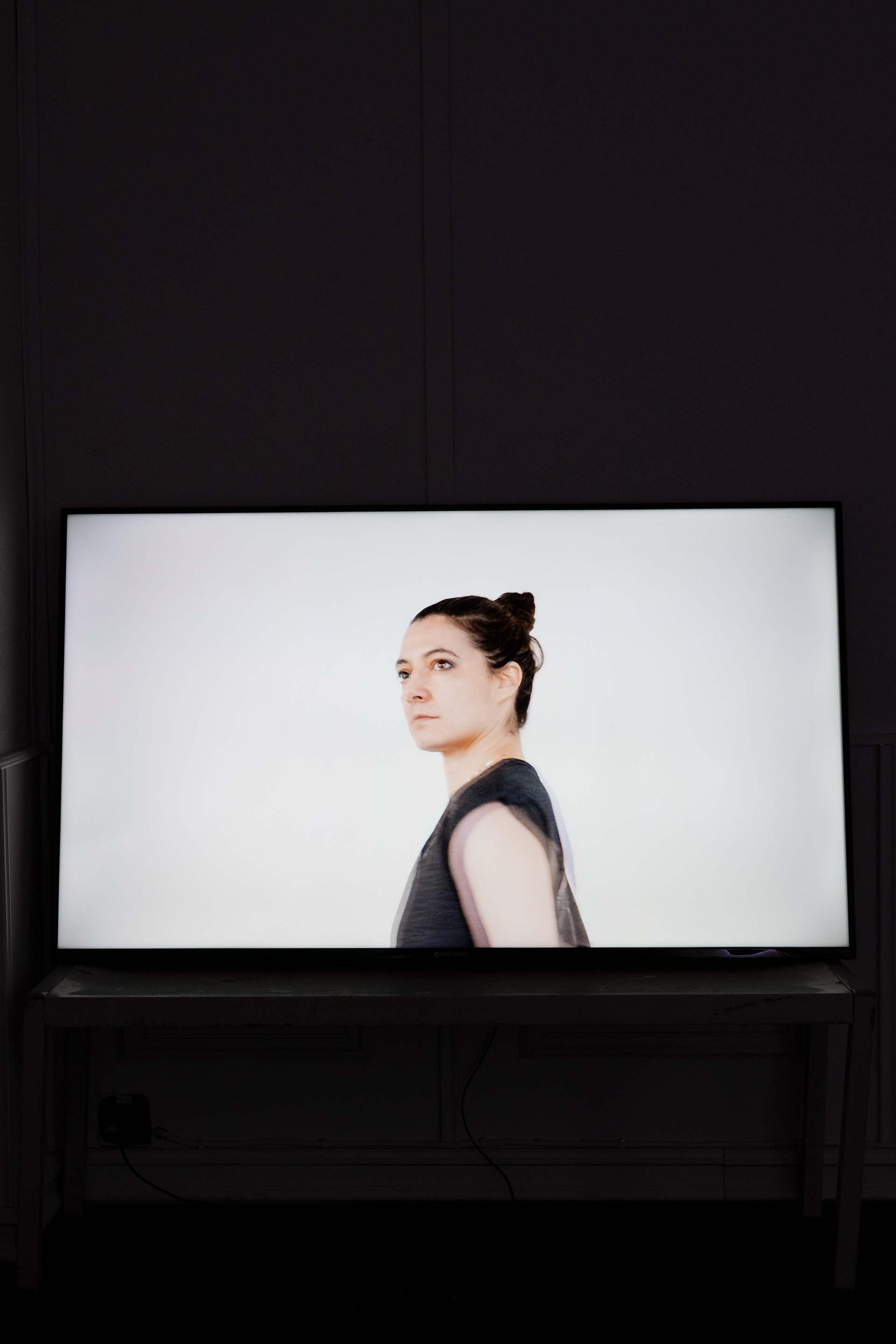
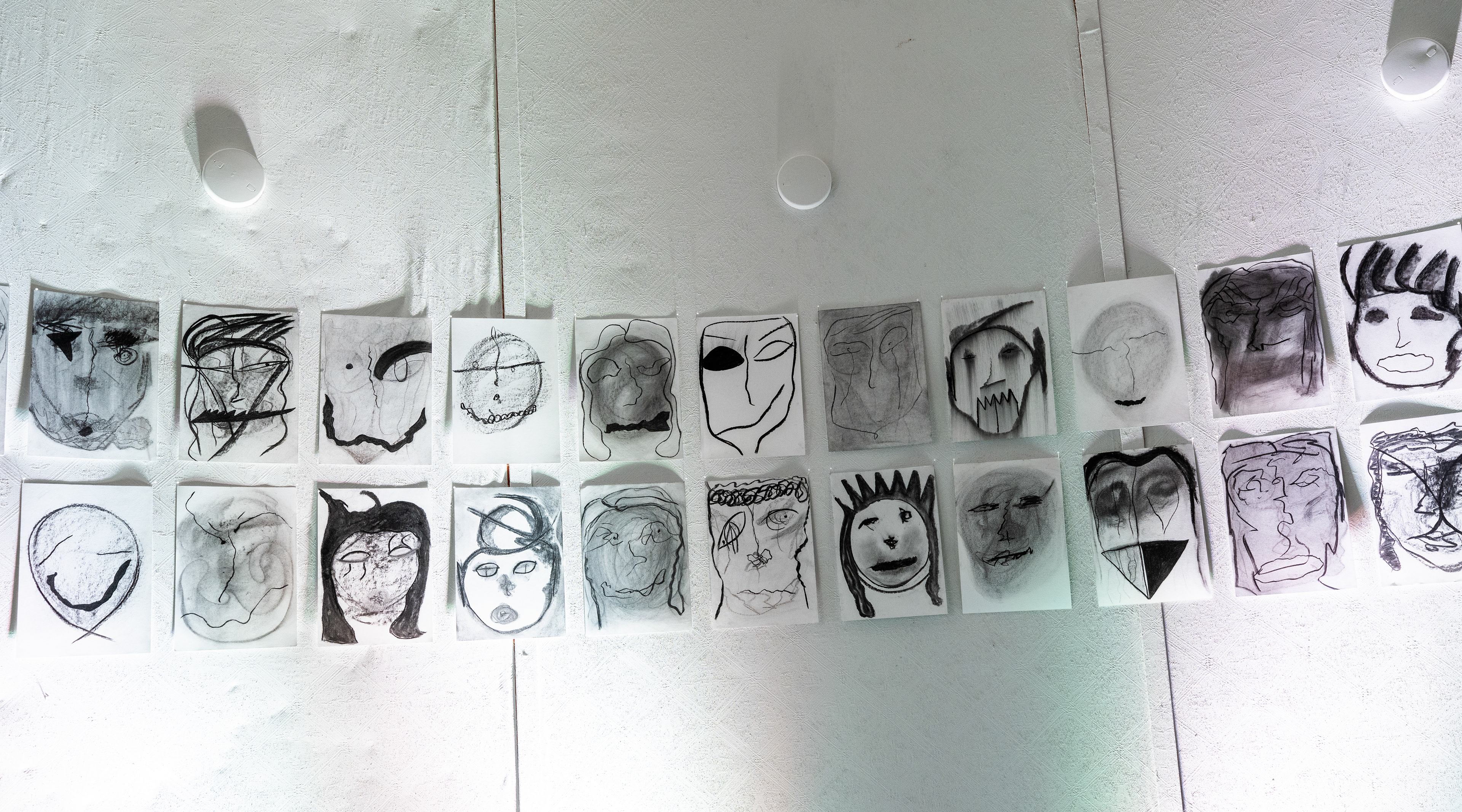
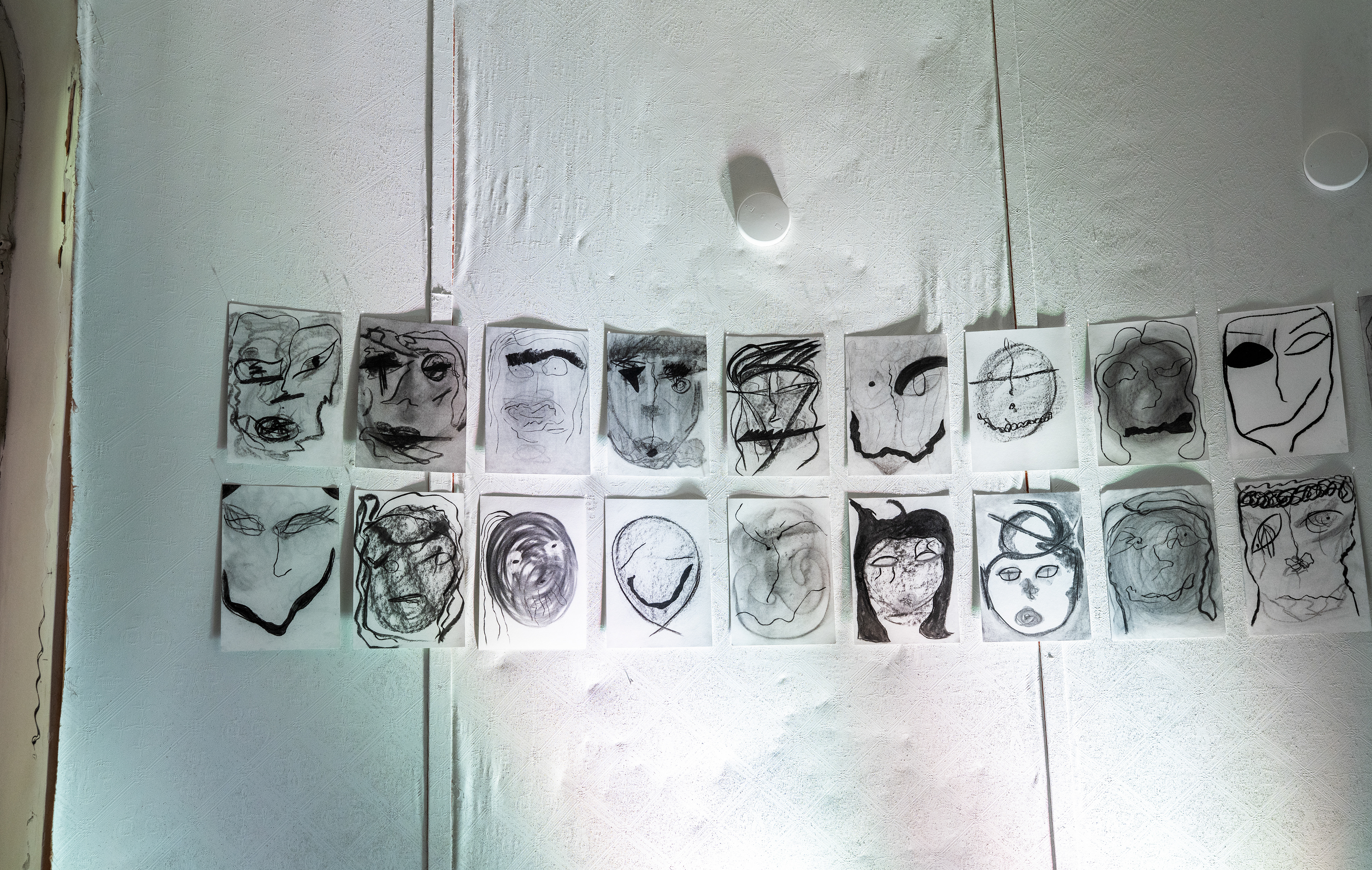
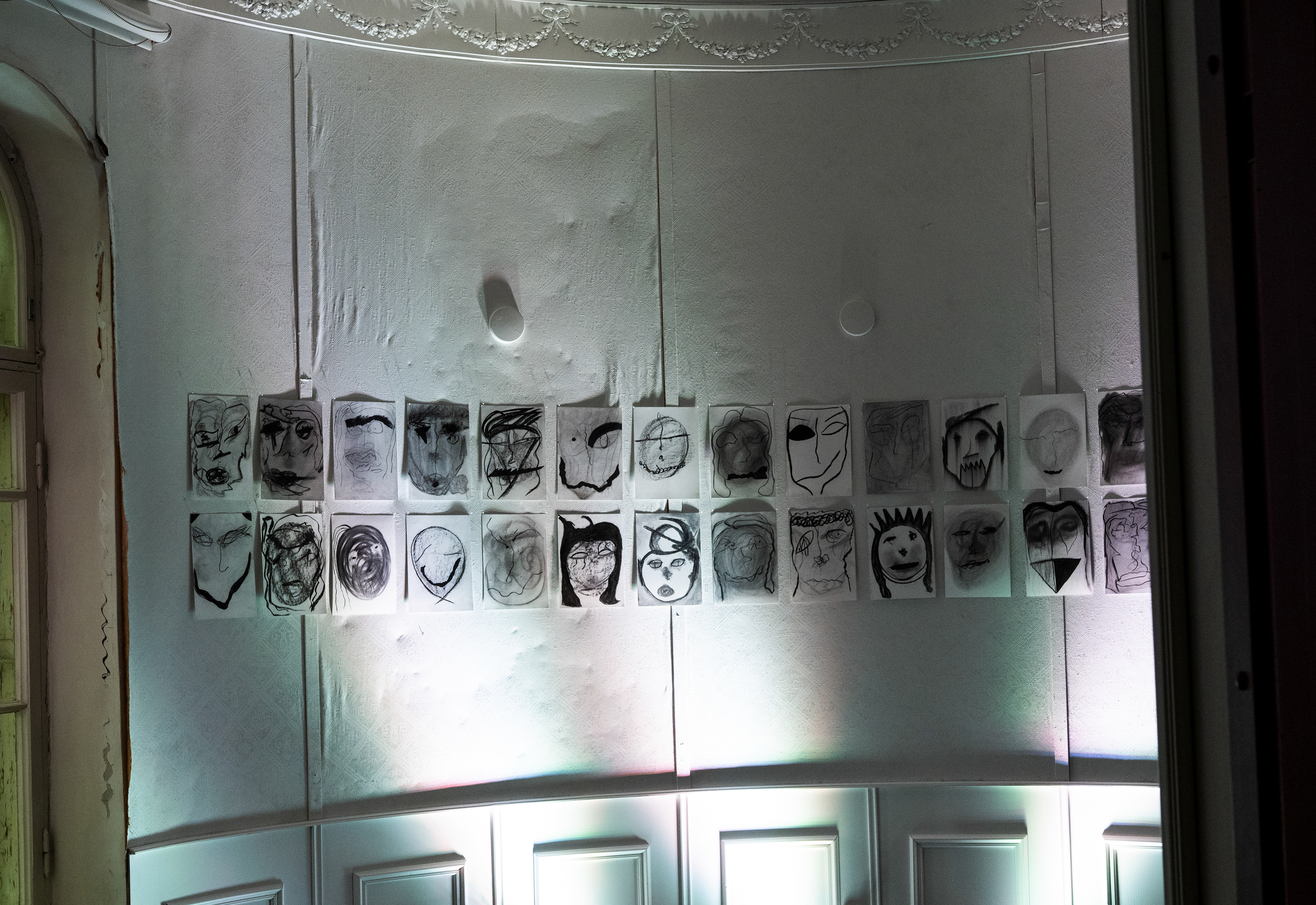
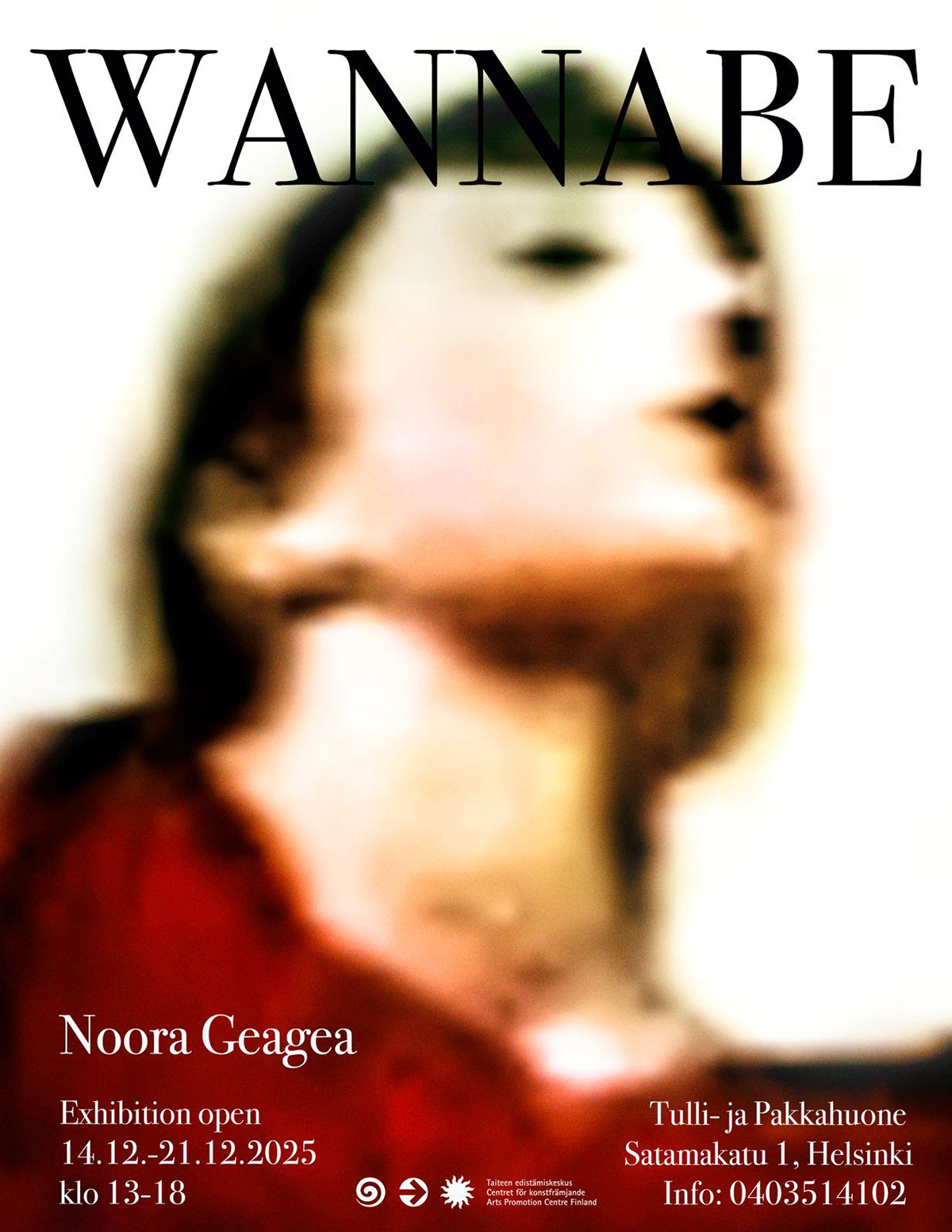
In the exhibition Wannabe, Noora Geagea looks directly at the psychological violence associated with competitive culture. Dozens of quickly executed charcoal drawings of faces form a matrix of abruptly changing emotional states. The intuitive and even childish images challenge the hierarchy of doing things "well" or "poorly," while communicating directly from emotional experience. Images of rhythmic gymnastics are now seen without spray paint: from the frames isolated from VHS videos, the child emerges alone, vulnerable and at the same time strong. The massively enlarged images of the child's face seem to search for an emotional state or identity from years ago. In a video work filmed for the exhibition, we see Geagea herself, performing an endless pirouette. In addition, Wannabe appears to challenge the competitive framework inherent within art and its rules of inclusion and exclusion.
From her own personal subjectivity, Geagea touches on themes of enormous social importance. Failure and the compulsion to succeed create a world that lives in fear of shame. Shame and being humiliated is a common violence, occurring equally in private situations as well as arenas of political power. Laughing at another strengthens the community of laughers and excludes the one being laughed at; whether it's bullying on social media, racist or sexist stereotypes. However, Geagea's world is not cynical as she regards the figures in her works with a profound empathy. So it is also in her exhibition Wannabe; as the artist settles accounts with competitive culture, she simultaneously looks at the child found in the works with compassion.
Terike Haapoja